


Naveen Kumar Singh
Naveen is a professional agile coach and has been working independently for a long time in the Asia... Read more


Naveen Kumar Singh
Naveen is a professional agile coach and has been working independently for a long time in the Asia... Read more

For many QA professionals in India’s IT industry, the past two years have been uncomfortable. Not because quality suddenly became unimportant. However, the nature of testing work is changing faster than many expected.
Automation tools have matured. AI tools can generate test cases. Developers are writing more automated tests themselves. And many QA professionals are quietly asking a difficult question:
“Will testing roles shrink in the AI era?”
The short answer is: traditional testing roles may shrink.
But quality engineering roles are expanding.
Understanding this shift is crucial for mid-career QA professionals.
Historically, QA in many organizations followed a predictable structure. Requirements were written → developers built features → QA validated them.
Testing often meant:
Manual test case creation
Regression testing
Bug reporting
Validating edge cases
This model worked when software cycles were slower. But modern software development looks very different. Continuous integration, cloud infrastructure, and DevOps practices have dramatically compressed release cycles. Products are updated weekly, sometimes daily. Manual-heavy QA processes struggle to keep up with that speed. Which is why organizations began investing heavily in test automation.
Automation frameworks have already transformed testing over the past decade.
Tools like Selenium, Cypress, and Playwright allowed teams to automate large parts of regression testing. But automation still required engineers to write scripts and maintain frameworks. AI is now pushing the next evolution. AI tools can assist with:
Generating test scenarios
Identifying edge cases
Predicting risk areas in code
Generating synthetic test data
Analyzing production logs for quality issues
These capabilities dramatically reduce the effort required for repetitive testing tasks. But here’s the key point many people misunderstand:
AI does not remove the need for quality thinking. It removes the need for repetitive manual testing.
AI agents are changing how software is built; don’t miss this shift. Join this full-day hands-on workshop of Agent-First Software Development with Antigravity to learn how agents can plan, build, test, and validate software. Limited seats for practical group learning.
Enroll Today!
Modern engineering teams increasingly talk about quality engineering instead of QA. The difference is subtle but important. Traditional QA often focused on detecting defects after development. Quality engineering focuses on preventing defects before they occur. Instead of asking - Did the feature work correctly?, quality engineers ask - How do we design the system so failures are less likely?
That shift changes the responsibilities of testing professionals. Quality engineering involves:
Building test automation frameworks
Designing resilient systems
Integrating testing into CI/CD pipelines
Analyzing production data to improve reliability
Collaborating with developers earlier in the design process
This is a much broader role than manual testing. But it is also far more valuable.
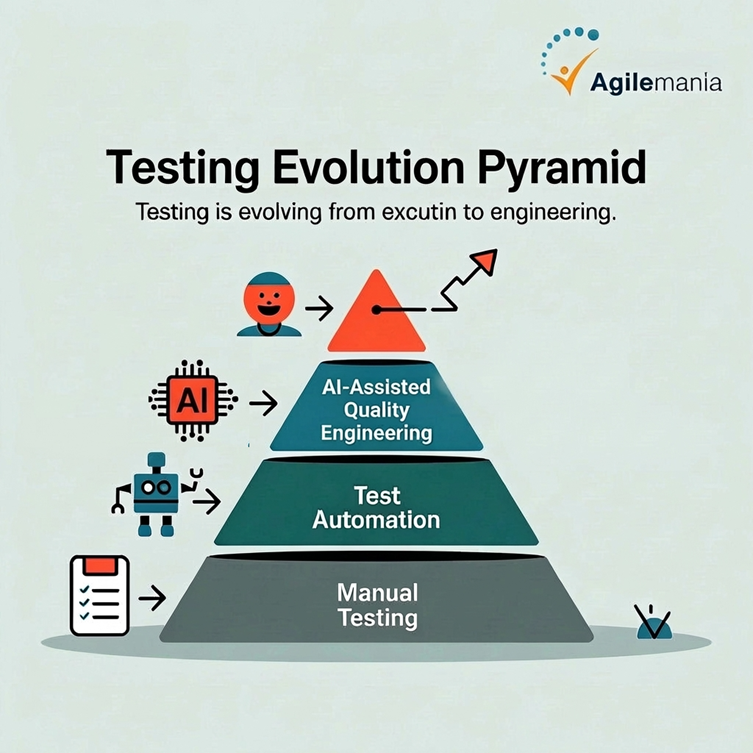
For professionals with 10–20 years of experience, the transition can feel overwhelming. Many built their careers by mastering manual testing processes, defect-tracking systems, and test case documentation. Those skills are not useless. But they are no longer sufficient on their own. The uncomfortable reality is this:
Organizations increasingly want QA professionals who understand engineering systems, not just testing tasks.
That means QA professionals must expand into areas like:
Automation frameworks
Scripting languages
Performance testing
Observability tools
It’s not about abandoning QA expertise. It’s about evolving the role.
In my conversations with teams and technology professionals, the QA professionals who are thriving today tend to have three characteristics.
First, they embrace automation as part of their identity, not as a threat.
Second, they understand the software architecture behind the systems they test.
Third, they position themselves as quality advocates within engineering teams, not just testers at the end of the pipeline.
These professionals are not waiting for work to arrive. They are shaping how quality is built into the product.
One way to think about this transition is through a simple career ladder.
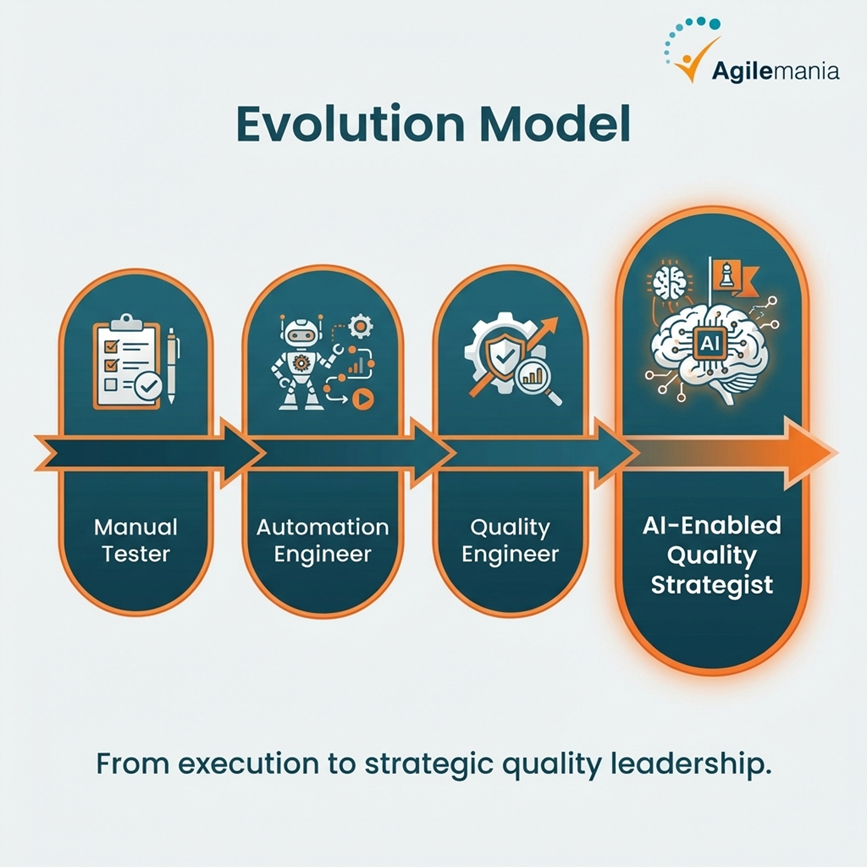
At each level, the scope of influence grows. Manual testers validate functionality. Automation engineers scale testing. Quality engineers influence architecture and development practices. AI-enabled quality strategists use tools and data to predict and prevent quality issues. That’s the direction the industry is moving.
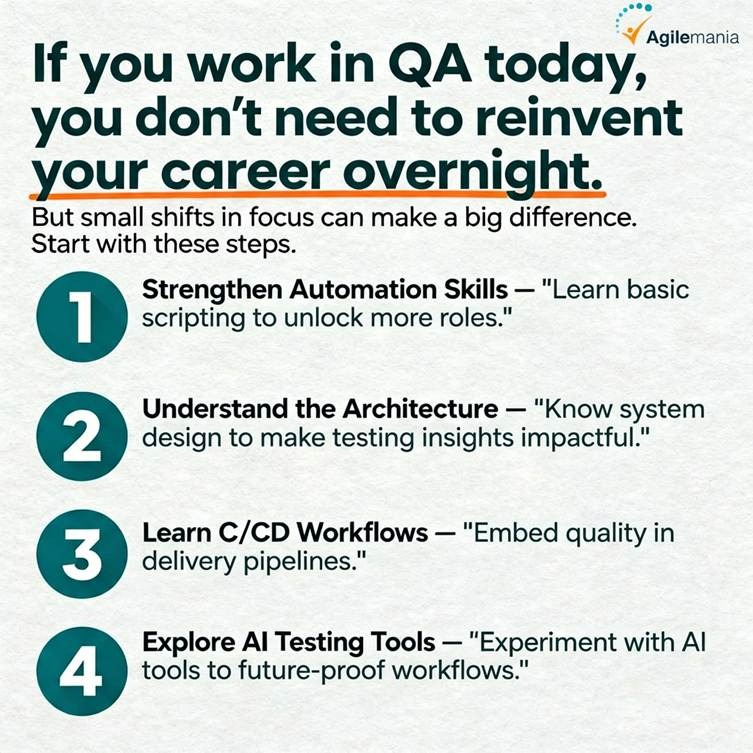
If you work in QA today, you don’t need to reinvent your career overnight. But small shifts in focus can make a big difference.
Start with these four steps.
1. Strengthen Automation Skills: Even basic scripting ability dramatically increases your career options.
2. Understand the Architecture: Learn how your system is designed. Understanding the architecture makes your testing insights far more valuable.
3. Learn CI/CD Workflows: Quality is increasingly embedded in delivery pipelines. Understanding those pipelines is essential.
4. Explore AI Testing Tools: Even experimenting with emerging AI tools will prepare you for future workflows.
For many years, testing was viewed as a final checkpoint before release. But modern engineering organizations are shifting toward a different philosophy. Quality is not something checked at the end. Quality is something designed into the system. And that shift creates a much bigger role for experienced QA professionals. Because preventing problems requires something AI still struggles with: Judgment about understanding system risk, identifying fragile architecture, and anticipating real-world user behavior. Those are human capabilities.
Automation and AI will change how testing work gets done. But they do not eliminate the need for quality expertise. In fact, they raise the bar. The future of QA is not about executing more test cases. It’s about engineering better systems. And the professionals who make that transition will find themselves more relevant than ever.
India IT workforce outlook reports from industry associations
Staffing and hiring trend summaries from workforce analytics firms
Consulting firm reports on AI and software engineering productivity
Industry analysis on automation and DevOps adoption trends
As QA moves toward automation, AI, and quality engineering, manual testing alone is no longer enough. The AI-Enabled Agile Bionic Software Testing Certification helps testers learn modern testing practices, CI/CD, and real-world tools used in today’s fast release environment. Build the skills needed to stay relevant and move toward quality engineering roles.
Enroll Now
Both QC and QA are related to quality, but QA is usually a better career option because it has wider scope and better growth.
In most cases, QA is considered better for long-term career growth, especially in the IT industry.
Yes, QA is still in high demand, but the demand is changing to include automation and advanced testing skills. The market for software testing is growing quickly, and businesses need QA experts to make sure their products are of high quality, especially when they release them quickly and have complicated applications.
But the most in-demand jobs are not just for manual testers; they are also for automation testers, SDETs, performance testers, and quality engineers.
Naveen is a professional agile coach and has been working independently for a long time in the Asia Pacific. He works with the software development team and product team to develop awesome products based on empirical processes.
WhatsApp Us