

















Agilemania
Agilemania, a small group of passionate Lean-Agile-DevOps consultants and trainers, is the most tru... Read more


Agilemania
Agilemania, a small group of passionate Lean-Agile-DevOps consultants and trainers, is the most tru... Read more

The term "agile product management" means precisely what it sounds like. The goal is to develop product strategies and roadmaps in an elegant setting. It promotes an adaptable approach to product development and deployment, allowing firms to adjust swiftly to input and create products that consumers enjoy.
At its foundation, agile product management is a reaction to the widespread usage of agile software development approaches such as Scrum or Kanban. These techniques stress evolutionary development, early delivery, and ongoing improvement. If you are new to elegance, you might find our agile development reference on the history and concepts of agile practices helpful.
Agile is altering how product managers think about product planning and development. Previously, new client experiences were planned, conceived, executed, and tested in stages. This signified that new features were introduced sequentially. As a result, it took a lot of work to adjust once the requirements were developed and passed to the development team.
However, the high failure rate of large-scale and time-consuming software development initiatives necessitated a more flexible approach. In addition, units required a method for adapting to client feedback and other learnings. Agile software development is more adaptable than traditional software planning and design. Products are produced in short increments, allowing product managers to change the plan.
Here are some of the primary advantages of agile product management:
Join our Product Owner PSPO Training for top-notch instruction from Naveen and Sumeet. With a 100% success track record, your training success is assured.
Register Today!
Plan the Roadmap for the Product - An agile roadmap establishes a short-term strategy for accomplishing the product objectively. It often indicates monthly or quarterly obligations and is periodically updated to reflect the change. Product managers create the roadmap around strategic work topics that support the overall strategy and provide substantial value to consumers.
Prioritize Features - They are maintaining the product backlog, establishing user stories, and determining what to create and when are all part of agile product management. In addition, product managers communicate directly with engineers to estimate features, verify requirements, and arrange a release schedule based on the team's capabilities.

Product Owner- A president is responsible for maximizing the product's value as developed by the development team. This internal function collects technical requirements, manages the product backlog, and specifies user stories.
Stakeholders - A software project's stakeholders can be anyone affected by its development. This category includes end users, executives, IT, operations, portfolio managers, and support staff. It is critical to recognize that these are roles instead of job designations. This can lead to misunderstandings between a product manager and a product owner. In actuality, the product manager is the owner of the product.
Test your knowledge and expertise to enhance your effectiveness in product management. Elevate your capabilities and excel in driving product success.
Start your journey now!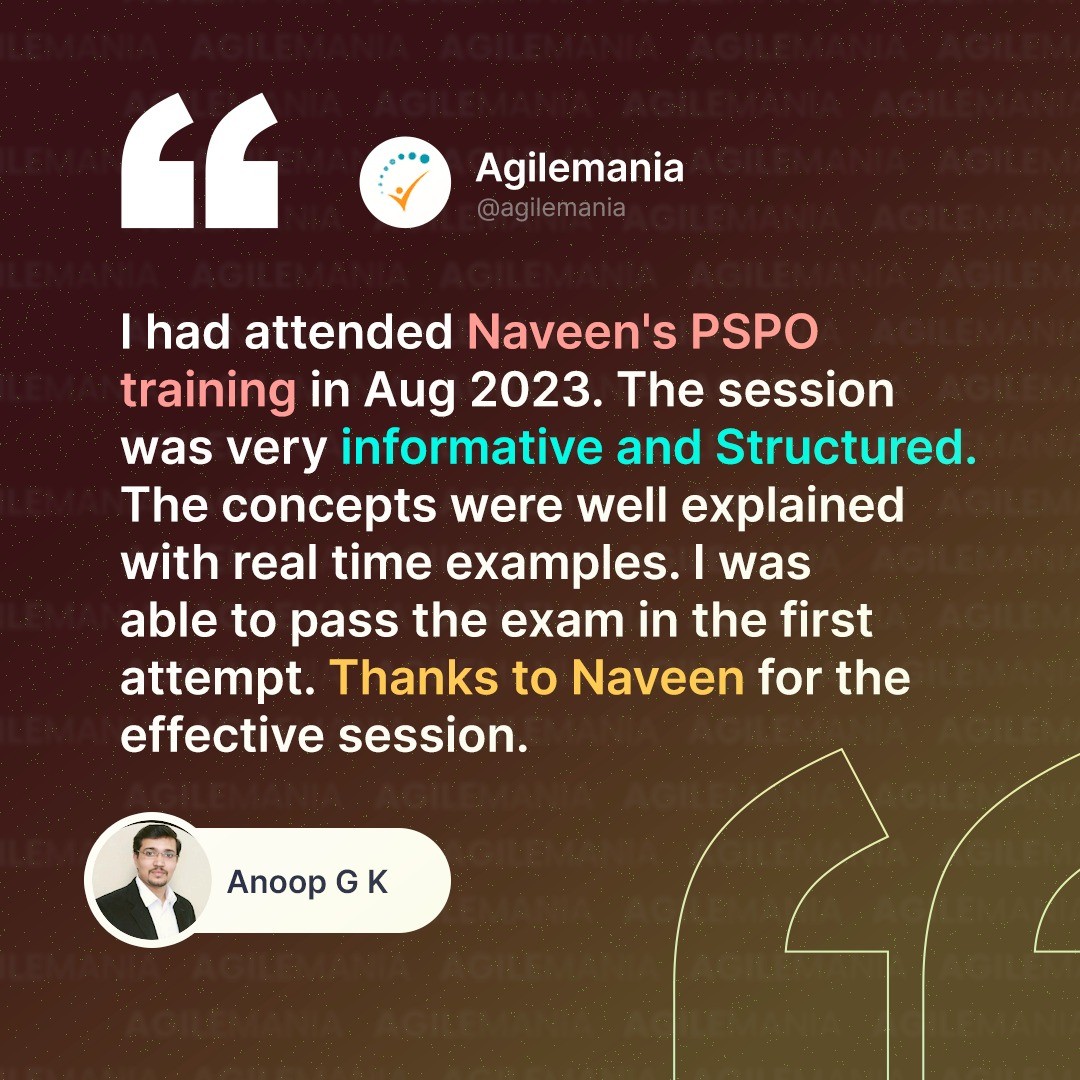
This is because a product owner's responsibilities primarily encompass the internal-facing work that a product manager does — collaborating closely with engineers to create innovative user experiences. Some firms divide product management work into two roles. The product manager takes on an external emphasis in this arrangement, while the product owner outlines user stories and participates in scrum rituals.
Both positions are critical to the overall success of a product and must collaborate closely to create things that people appreciate.
I hope this post has given you a better understanding of agile product management and helped you see if it fits your work. While it might not be the most traditional approach to product management, it's certainly one that more and more companies are adopting. So follow these tips, and work well with your "cross-functional, self-organizing, multi-disciplinary team.
Agilemania, a small group of passionate Lean-Agile-DevOps consultants and trainers, is the most trusted brand for digital transformations in South and South-East Asia.
WhatsApp Us